Gravitational-wave interferometers are among the most sensitive instruments in the world. They can measure gravitational-wave strain as small as . However, such a sensitivity comes at a cost: even ocean waves hundreds of kilometers away can introduce noise in the gravitational-wave data.
This excess noise needs to be removed, especially if it overlaps an astrophysical signal in the gravitational-wave data. For example, I created a machine-learning algorithm to remove the radio frequency noise around GW200129 (see the nlsub project ).
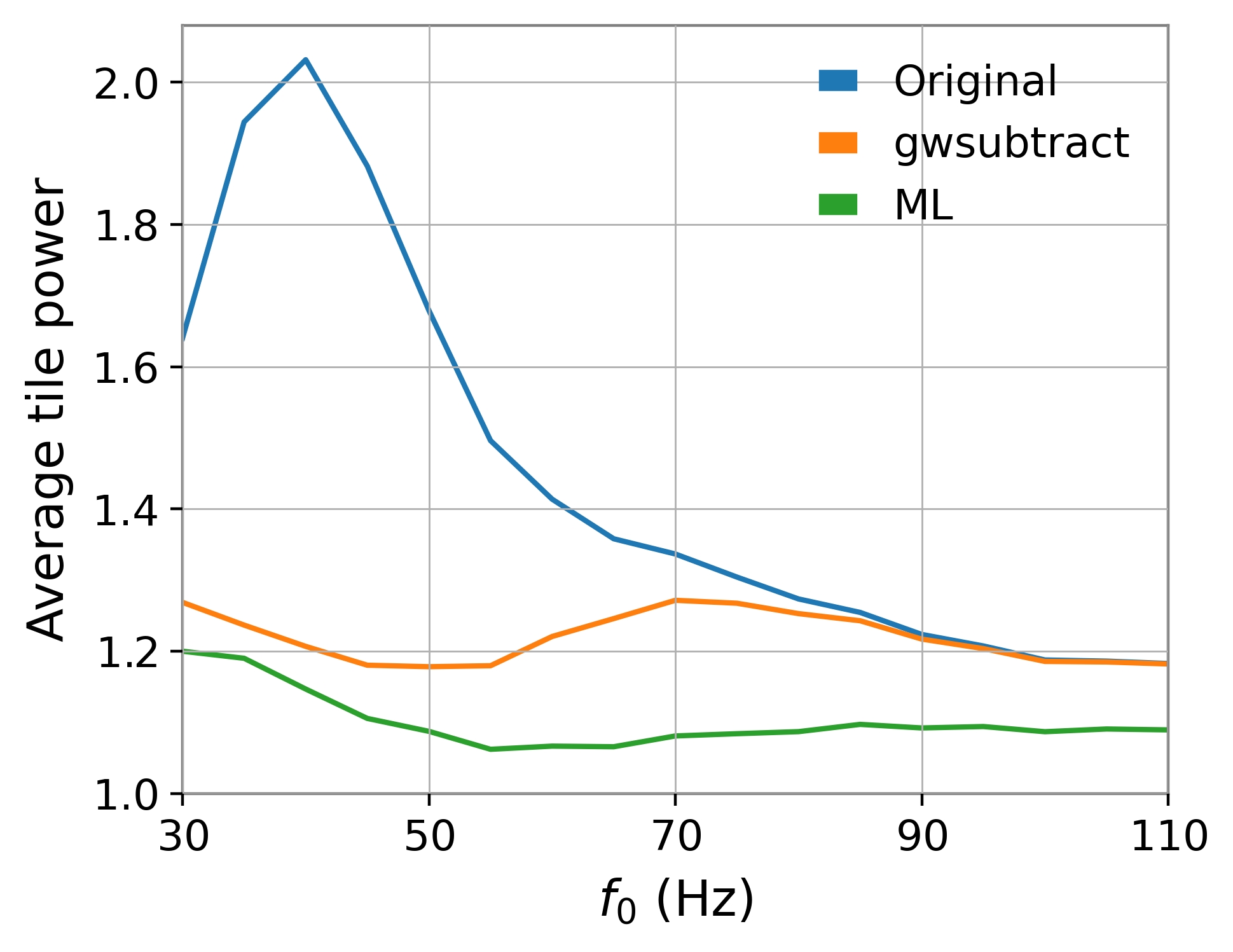
To determine whether this algorithm removes noise better than other techniques, I had to develop a sensitive method to measure the amount of non-Gaussian noise in the data. Using mixture models, I showed that my machine-learning algorithm indeed removes more noise than the conventional methods used at the time.
Read the paper in Physical Review D or the free version on arXiv .